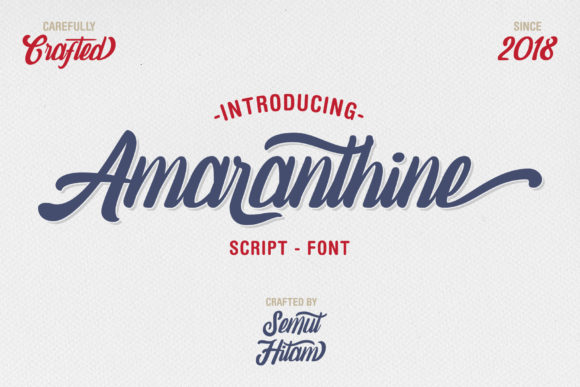
Amaranthine Script: An Objective Evaluation for Researchers and Creators
When exploring unique writing systems for creative, linguistic, or personal projects, the term Amaranthine Script appears with increasing frequency. For those encountering it for the first time, questions arise. What is it? Does it serve a practical purpose, or is it primarily artistic? And, most importantly, is it the right choice for your specific needs? This article provides an objective evaluation of Amaranthine Script, covering its nature, potential benefits, tradeoffs, and practical decision-making insights to help you determine whether it aligns with your goals.
What Is Amaranthine Script?
Amaranthine Script is a constructed writing system, often created for aesthetic, narrative, or linguistic purposes. Unlike natural scripts that evolve organically over centuries, constructed scripts are deliberately designed, typically by an individual or a small community. The term "amaranthine" itself draws from the Greek word for "unfading" or "everlasting," which often informs the script's visual philosophy: a design intended to evoke timelessness, elegance, and endurance.
Depending on the specific version or creator, Amaranthine Script can take the form of an alphabet, a syllabary, or a logographic system. It is most commonly encountered in the context of world-building, fantasy literature, role-playing games, calligraphy, and artistic projects. Some versions are purely decorative, while others are fully functional writing systems with defined phonetics and grammar. This dual nature makes it a subject of interest for both artists and linguists.
It is important to note that Amaranthine Script is not a single, standardized entity. Variations exist, which can affect consistency and community support. This lack of central standardization is a key consideration for anyone evaluating it for serious use.
Why Consider Amaranthine Script?
Interest in Amaranthine Script typically stems from one or more of the following motivations:
- Creative expression: Many users are drawn to the script's distinctive visual aesthetics. It offers a means of personal expression that transcends conventional typography.
- World-building authenticity: For writers, game designers, or artists building fictional cultures, a unique script adds depth and believability to the setting.
- Linguistic exploration: Enthusiasts of constructed languages (conlangs) often pair them with constructed scripts for a complete communication system.
- Intellectual challenge: Learning, memorizing, and using a non-standard writing system can be a rewarding cognitive exercise.
- Privacy or personal use: Some adopt Amaranthine Script for journaling or note-taking, valuing the relative obscurity of the system.
Benefits and Tradeoffs of Adopting Amaranthine Script
Like any specialized tool, Amaranthine Script comes with both advantages and limitations. Understanding these can help you decide whether the benefits outweigh the tradeoffs for your situation.
Benefits
- Visual uniqueness: The script stands out from common writing systems. Its design often incorporates flowing lines, symmetrical forms, or symbolic elements that make it highly aesthetic.
- Narrative enhancement: In a story or game, characters using Amaranthine Script can quickly signal cultural sophistication, ancient knowledge, or a connection to timeless themes.
- Creative ownership: You can adapt or personalize the script to suit your own project, making it distinctly yours.
- Community engagement: Certain online communities and forums dedicated to constructed scripts provide support, resources, and feedback for users of Amaranthine Script.
Tradeoffs
- Learning curve: Because it is not a mainstream script, learning to read and write Amaranthine Script fluently requires dedicated time and practice. Resources may be limited.
- Limited practical applications: Outside of specific creative or personal contexts, the script has little real-world utility. It will not help with daily communication, education, or professional tasks.
- Lack of standardization: As mentioned, variations exist. If you rely on one version, you may find it difficult to share content with others who use a different variant.
- Digital support limitations: Most constructed scripts are not included in standard font libraries or Unicode. Using Amaranthine Script digitally may require custom fonts, image-based rendering, or specialized software.
- Potential isolation: Very few people will be able to read your writing. If your goal is communication with a wide audience, this script works against that aim.
Practical Considerations and Expectations
Before committing to Amaranthine Script, evaluate the following practical factors:
- Time investment: Learning the script thoroughly may take weeks to months, depending on its complexity and the availability of learning materials. Consider whether this time aligns with your broader goals.
- Purpose alignment: Be honest about what you need. For purely decorative use, a simplified version of the script may suffice. For functional writing, you need a version with clear orthographic rules.
- Resource availability: Check for existing guides, charts, tutorials, or fonts. Limited resources can slow your progress and increase frustration.
- Long-term commitment: Constructed scripts can become a long-term passion, but they can also be a passing interest. Assess whether you are prepared for ongoing engagement, especially if you embed the script in a larger project like a novel or game.
- Sharing and collaboration: If you plan to collaborate with others, ensure everyone is willing to learn the same version of the script. This can be a significant coordination challenge.
Situations Where Amaranthine Script Excels
There are specific contexts where Amaranthine Script is not just a novelty but a genuinely strong fit:
- Fantasy and science fiction world-building: Writers and game masters can use the script for maps, ancient texts, inscriptions, and personal correspondence between characters. It adds a layer of immersion that a conventional font cannot replicate.
- Art and calligraphy projects: The script's design often lends itself to ornate, decorative presentation. It works well for art prints, tattoos, invitations, or other visual mediums where aesthetic impact is the primary goal.
- Personal journals and diaries: For those who value privacy, Amaranthine Script provides a functional barrier. Even if someone finds your journal, they cannot easily read its contents.
- Conlang integration: If you are developing a constructed language, pairing it with a constructed script like Amaranthine Script creates a more complete and cohesive system.
- Ritual or ceremonial use: Some users adopt the script for personal rituals, meditation, or symbolic writing, leveraging its "everlasting" connotations.
When Alternatives May Be More Suitable
No script is universally ideal. In several situations, alternative writing systems or approaches may serve you better.
- If your primary goal is broad communication: Stick with a widely recognized script such as Latin, Arabic, Devanagari, or Cyrillic. These systems have universal digital support, extensive learning resources, and large user communities.
- If you need academic or professional credibility: Constructed scripts are generally not accepted in formal education, research, or business contexts. Use standard scripts for any official documentation.
- If you prioritize speed and efficiency: Learning and writing in Amaranthine Script is rarely fast. For quick note-taking or daily use, a familiar script is more practical.
- If you are on a tight schedule: World-building or artistic projects with looming deadlines may not accommodate the time required to learn and implement a new writing system. Consider using a decorative font that mimics the look of a constructed script instead.
- If you lack a supportive community: Without access to forums, guides, or other users, learning and troubleshooting Amaranthine Script can become a solitary and slow process. Alternative constructed scripts with larger communities, such as Tengwar or Klingon script, may offer more support.
Decision-Making Insights for Prospective Users
Choosing whether to invest in Amaranthine Script comes down to a honest evaluation of your priorities. Here are practical questions to guide your decision:
- What do you want to achieve? If your goal is artistic or personal enrichment, the script can be a rewarding pursuit. If your goal is utility or reach, look elsewhere.
- How much time can you dedicate? Set a realistic estimate. If you cannot commit regular practice, the script will remain a surface-level novelty rather than a functional tool.
- Do you have a clear application? A defined project—such as a novel using the script for a fictional culture—provides motivation and structure. Without a concrete application, interest may wane.
- Are you comfortable with limitations? Accept that few people will read your script, and digital integration may be rough. If that bothers you, reconsider.
- Have you explored other options? Compare Amaranthine Script with other constructed scripts (for example, Tengwar, Klingon, Aurebesh) or existing historical scripts (such as Ogham, Runes, or Shavian). Each has its own aesthetic, complexity, and community support.
Ultimately, Amaranthine Script occupies a niche but valuable space. It is not a replacement for everyday writing, nor is it designed to be. Its value lies in its capacity to enrich creative work, provide personal meaning, and connect users to the ancient human practice of shaping symbols into meaning. If that resonates with your goals, it may be worth exploring. If not, there are many other paths to achieve what you need.
Note: This evaluation is based on general observations about constructed scripts and the typical characteristics of systems described as "Amaranthine Script." Because no official central standard exists, specific features and resources vary. Always verify details with the specific version or creator you intend to use.