Boxing Creativity: How Constraints Fuel Original Work
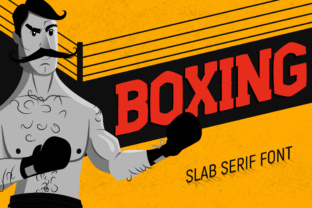
At first glance, the word boxing might conjure images of gloves, a ring, and a referee. But for anyone working in a creative field—whether you are a designer, marketer, entrepreneur, or hobbyist—boxing means something else entirely. It refers to the practice of working within a defined set of boundaries, limits, or constraints. The idea runs counter to the popular belief that creativity thrives best when there are no rules. In reality, the opposite is often true. Boxing your creative process can be the very thing that pushes you toward your most original and effective work.
When you have unlimited options, the number of choices can become paralyzing. You might spend hours, even days, wandering through possibilities without ever committing to a direction. Boxing introduces a frame. It removes the overwhelming freedom that often stalls progress and replaces it with a focused arena where real creative thinking can happen. This is not about restricting yourself for the sake of restriction. It is about choosing the right boundaries so that your energy goes into solving the problem, not into deciding which of ten thousand paths to take.
What Makes Boxing Useful for Creative Work
The usefulness of boxing comes from the tension it creates between limitation and imagination. When you have fewer tools, fewer colors, fewer words, or a tighter deadline, your brain is forced to work differently. It cannot rely on the easy solution. It has to find new combinations, unexpected angles, and resourceful workarounds. That is where genuine creativity emerges.
Consider a designer who limits their palette to only two colors. The restriction does not make their job harder—it makes it more interesting. They must think about contrast, texture, and negative space in a way they would not if they had full access to every hue. The same applies to a writer who commits to a strict word count or a marketer who launches a campaign with a tiny budget. Boxing shifts the focus from what you cannot do to what you can do within the space you have.
Another key benefit is clarity. When you define the boundaries of a project early on, everyone involved understands the playing field. Decisions become faster. Feedback becomes more focused. You spend less time debating what the project should be and more time refining what it already is. For small business owners and freelancers who wear many hats, this clarity is invaluable. It prevents scope creep and keeps projects moving forward without endless revision cycles.
Creative Possibilities Within the Box
Boxing is not a one-size-fits-all approach. There are many ways to apply it, and the best method depends on your specific goals, audience, and medium. Below are several variations that different creative professionals can adapt to their own work.
Format Constraints
One of the simplest and most effective forms of boxing is limiting the format you work in. For a blogger or publisher, this might mean writing every post in exactly 300 words. For a video creator, it could mean filming everything in a single take with no edits. For a designer, it might mean using only typography and no imagery. The constraint forces you to be economical with your choices. Every element must earn its place.
I have seen photographers limit themselves to shooting only with a 50mm lens for an entire year. The result was not boring work—it was a deeply consistent and recognizable style that attracted a loyal audience. The same principle applies to any content creator. When you commit to a format, you develop a signature approach that people start to recognize and trust.
Time-Based Boxing
Deadlines are a natural form of boxing, but you can take this further. Try setting shorter, artificial deadlines that are tighter than what the project actually requires. Give yourself two hours to complete a task that would normally take four. The pressure forces you to make quick decisions and trust your instincts. You often discover that your first idea, refined under pressure, is stronger than something you would have agonized over for days.
Marketers and entrepreneurs can use time boxing to launch minimal viable versions of campaigns or products. Instead of waiting for everything to be perfect, you launch with what you have, learn from the response, and iterate. This approach respects the reality that perfection is rarely achieved and almost never needed.
Material or Resource Limitations
For hands-on creators, limiting your materials can unlock surprising results. A painter might work only with a palette knife and no brushes. A writer might compose an entire article using only one-syllable words. A web designer might build a landing page using nothing but HTML and no CSS framework. These restrictions force you to develop new techniques and find beauty in simplicity.
Entrepreneurs can apply this to product development. If you decide that your new product must be made from a single material or must cost under a certain amount to produce, you immediately eliminate entire categories of complexity. What remains is a lean, focused offering that is easier to explain, produce, and sell.
Adapting Boxing for Different Audiences and Platforms
How you apply boxing should change depending on who you are creating for and where that work will appear. A constraint that works well for an Instagram post may feel suffocating for a long-form article. The key is to match the boundary to the context.
For social media content: Short attention spans demand immediate clarity. Box yourself into a single message per post. Do not try to explain everything. Pick one idea and make it stand out. Use a consistent visual style so your audience knows what to expect from you before they even read the caption.
For email newsletters: Limit yourself to one topic per email. Resist the urge to share three or four ideas. Readers appreciate focus. If you have more to say, that can wait for the next email. Consistency in delivery is more valuable than trying to pack everything into one message.
For product design: Define a core set of features that your product absolutely must have, and then build nothing else. Every additional feature is a distraction. This approach, often called a minimum viable product, is a direct application of boxing. It keeps development costs low and lets you test the market before investing more.
For educators and trainers: Box your lesson to one core concept per session. Students retain more when they are not overloaded. Use a consistent structure for each lesson so learners know what to expect and can focus on the content rather than figuring out the format.
Keeping Results Clear and Audience-Friendly
Boxing can sometimes lead to work that feels too rigid or formulaic. The goal is not to become robotic. It is to use constraints as a creative tool while keeping the human element front and center. Here are a few recommendations to keep your work clear, effective, and engaging.
- Test your constraints before committing fully. What sounds like a productive limit might actually be a hindrance in practice. Try a small version of your constraint first, see how it feels, and adjust before scaling up.
- Leave room for surprise. A box that is too tight can crush spontaneity. Build in a little flexibility. For example, if you are writing within a word limit, allow yourself a ten percent buffer for pieces that genuinely need it. The constraint should guide you, not strangle you.
- Prioritize clarity over cleverness. A constraint is useful only if the result is easy to understand. Do not sacrifice readability or user experience just to follow a rule. If a constraint makes your work confusing, change the constraint.
- Review your work with fresh eyes. After you complete a project within a box, step away for a day or two and come back to it. Does it still feel right? Does it communicate what you intended? Sometimes the constraint leads you to a place that looks good in the moment but fails for your audience. Be willing to adjust.
Staying Consistent Without Becoming Predictable
One of the dangers of boxing is that your work may start to feel repetitive. The solution is not to abandon constraints but to rotate them. Change the box for each project. This month, limit your color palette. Next month, limit your format. The month after, limit your tools. Each new constraint challenges you in a different way, and the variety keeps your creative muscles engaged.
Consistency in quality is what you want, not consistency in method. Your audience will appreciate that your work is reliably thoughtful and well executed, even if the specific approach changes. In fact, the shifts can become part of your creative identity—people look forward to seeing what you will do next within the next set of rules you give yourself.
Practical Inspiration for Getting Started
If you are ready to try boxing in your own work, start small. Pick one project and define a single constraint that feels both challenging and achievable. Write down what the constraint is and why you are choosing it. Then commit to completing that project before you judge the outcome. Afterward, reflect on what the constraint helped you discover. Did it push you in a direction you would not have explored otherwise? Did it save you time? Did it make the final result stronger or weaker?
You might be surprised to find that the box you built for yourself becomes a space you genuinely enjoy working in. Many creative professionals who adopt intentional constraints report feeling less anxious and more productive. The boundaries provide a sense of safety and direction that open-ended freedom never could.
Boxing is not about giving up options. It is about choosing the right options so that your best work has a clear path to the surface. Whether you are a designer, a marketer, a writer, or an entrepreneur, the next great idea you are looking for might already be waiting inside a box you have not yet built.