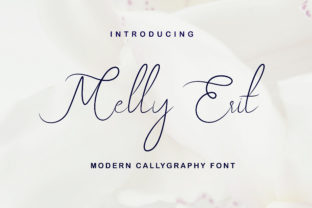
Melly Eret: A Strategic Framework for Intentional Outcomes
When you navigate complex decisions or long-term projects, having a reliable mental model can make the difference between scattered effort and focused progress. Melly Eret is one such framework—a systematic approach to aligning your actions with your most important goals. While not a household name, it offers practical structure for anyone who wants to move from reactive busyness to deliberate achievement. This article unpacks what Melly Eret is, how to use it strategically, and what to watch out for when applying it.
Understanding Melly Eret and Its Core Purpose
At its simplest, Melly Eret is a prioritization and evaluation method. It helps you break down objectives into manageable components, then assess each action or resource against your ultimate desired outcomes. Think of it as a mental filter: before committing time, money, or creative energy, you ask whether the move serves your strategic intent. This isn’t about rigid checklists; it’s about developing a reflexive habit of asking: “Does this advance my core purpose?”
The name itself stems from the conjunction of “methodical intent” and “repeatable effect”—two pillars that distinguish random activity from intentional work. By internalizing Melly Eret, you build a decision-making discipline that reduces noise and amplifies relevance. For busy professionals—whether you are a solopreneur, a marketing lead, or an educator—this clarity pays dividends.
Why Melly Eret Matters for Goal-Oriented Professionals
Most people set goals, but few systematically align their daily tasks with those goals. Melly Eret bridges that gap. Instead of having aspirations on one side and frantic to-dos on the other, you create a feedback loop where every action is either validated or redirected.
- Greater focus: When you consistently apply the Melly Eret lens, you naturally eliminate tasks that feel urgent but are actually irrelevant. This frees up mental energy for what truly moves the needle.
- Better resource allocation: Whether you are deploying budget, staff time, or personal effort, Melly Eret forces you to ask: “Is this the best use of this resource relative to my primary outcomes?”
- Faster learning cycles: By tying each attempt to a clear goal, you can quickly identify what works and what doesn’t. Your experiments become structured learning rather than guesswork.
Entrepreneurs and small business owners often find this particularly valuable when launching new products or services. Instead of spreading thin across multiple opportunities, they use Melly Eret to select one or two high-leverage paths and pursue them with depth.
Enhancing Decision-Making and Planning
Decision fatigue is real, especially when you face numerous options daily. Melly Eret provides a decision framework that reduces cognitive load. For example, when planning a content strategy, you can map every topic idea back to a core audience need and a business objective. If an idea doesn’t serve both, you shelve it. This disciplined filtering keeps your editorial calendar coherent and your brand message consistent.
In long-term planning, the framework encourages incremental commitment. Rather than locking yourself into a rigid roadmap, you use Melly Eret to assess progress at regular intervals. You ask: “Given what I now know, is this still the best path?” This adaptive approach prevents sunk-cost bias and allows for strategic pivots without losing sight of your ultimate goal.
Improving Communication and Positioning
Melly Eret also refines how you communicate. When you understand your core purpose clearly, your messaging becomes sharper. You stop trying to appeal to everyone and instead speak directly to the audience whose needs align with your offering. This targeted communication builds trust and authority over time.
For consultants and freelancers, positioning yourself using Melly Eret can be a game-changer. You define your niche based on the intersection of your expertise, market demand, and personal passion. Every proposal, website update, or networking conversation then reinforces that positioning. Clients perceive you as focused and reliable—not as a generalist who does a little of everything.
Practical Applications of Melly Eret in Daily Work
The real power of Melly Eret emerges when you apply it to routine activities. Below are three common professional scenarios where the framework adds measurable value.
For Creators and Freelancers
A freelance graphic designer might use Melly Eret to decide which projects to accept. Before saying yes, they evaluate a potential client against criteria like alignment with their design strengths, opportunity for portfolio growth, and fair compensation. If the project fails two out of three criteria, they pass. This intentional selection builds a stronger portfolio and reduces burnout.
Similarly, a writer or blogger can apply the method to draft outlines. They start with the core message they want to communicate, then support it only with evidence or anecdotes that directly reinforce that message. The result? Tighter, more persuasive content that readers find genuinely helpful.
For Entrepreneurs and Small Business Owners
Imagine you run a small e-commerce store. Seasonal sales, influencer collaborations, and product line expansions each promise growth. But which one deserves your limited capital? Using Melly Eret, you rank each option based on its impact on your primary business goal—say, increasing repeat customer rate by 20% this year. You then invest resources only in the top-ranked initiative, resisting the temptation to chase every shiny opportunity.
Operationally, Melly Eret can streamline vendor selection, hiring, and even customer service protocols. For instance, you might develop a short set of questions for every new hire to ensure their values align with your company’s mission. Over time, this cultural consistency becomes a competitive advantage.
When to Apply Melly Eret and When to Step Back
The framework is most useful in contexts where you have control over decisions and a clear—or at least evolving—sense of what matters. It shines during strategic planning, quarterly reviews, project initiation, and when you face a fork in the road. It is less helpful when you are in pure exploration mode or when data is too sparse to evaluate outcomes. In early ideation, you might want to diverge before converging; Melly Eret works best after you have a set of viable options to compare.
Another important nuance: avoid applying Melly Eret so rigidly that you stifle serendipity. Some of the best opportunities come from unplanned interactions or tangential ideas. The trick is to give yourself permission to explore briefly, then use the framework to decide whether to continue deeper exploration or redirect effort back to your primary goal. A healthy rhythm is diverge for creativity, converge using Melly Eret for implementation.
How to Approach Melly Eret with Clear Goals
To get the most out of Melly Eret, start by defining your goal with specificity. Vague objectives yield vague evaluations. Instead of “I want to grow my business,” say “I want to increase monthly recurring revenue by 15% within six months.” The clarity allows the method to produce actionable answers.
- Articulate your primary outcome: Write it down in measurable terms.
- List your current or planned actions: Identify every project, task, or resource commitment.
- Score each action against the outcome: Use a simple scale—high, medium, low—to gauge alignment.
- Decide and sequence: Invest in high-alignment items first; reconsider or pause low-alignment ones.
- Review periodically: Revisit your assessment as circumstances change or new information emerges.
This five-step process turns Melly Eret from a vague concept into a daily practice. Over several weeks, you will notice a shift in how you spend your time—less busywork, more meaningful progress.
The Risks of Using Melly Eret Without Context
No framework is foolproof, and Melly Eret has pitfalls when applied carelessly. The most common risk is goal myopia. If you set a narrow goal and apply the method too strictly, you might ignore important side effects or adjacent opportunities. For example, a business solely focused on short-term revenue might reject investments in brand building that pay off later. The remedy is to define your goal broadly enough to encompass multiple dimensions of success—profit, customer satisfaction, team morale, and long-term resilience.
Another risk is analysis paralysis. Some users get caught in endless scoring and recalibration, deferring action indefinitely. Melly Eret is meant to enable decisions, not delay them. If you find yourself spending hours on a single evaluation, step back and set a time box. Accept that perfect alignment is rare; good enough is often wise.
Finally, using Melly Eret without understanding your underlying motivations can lead to hollow optimization. You might efficiently pursue a goal that does not genuinely matter to you or your stakeholders. The framework is a tool, not a compass. Ensure that your core purpose comes from honest introspection, not external pressure or mimicry.
Long-Term Value and Strategic Consistency
The ultimate benefit of Melly Eret is not any single decision but the muscle of intentionality it builds. Over months and years, you develop a consistent pattern of aligning your resources with your deepest priorities. This consistency strengthens your personal brand, your organization’s reputation, and your ability to deliver results.
Consider the case of a learning professional who adopts Melly Eret to guide their upskilling journey. Instead of jumping from course to course, they map each learning investment to a specific career outcome—for example, earning a promotion or transitioning to a new field. After each learning cycle, they evaluate whether the knowledge gained actually moved them closer to that outcome. This intentional approach accelerates competence and makes learning a competitive advantage rather than a hobby.
Similarly, a blogger or publisher can use Melly Eret to build a content library that ranks well and serves readers. By evaluating every post against a core editorial mission (say, “helping entrepreneurs simplify operations”), the content becomes coherent and authoritative. Over time, the site earns trust (hypothetical internal link) and steady traffic from a targeted audience.
In branding and customer experience, the framework ensures that every touchpoint—from your website copy to your after-sales support—reinforces the same promise. Customers experience a unified brand, which boosts loyalty and word-of-mouth referrals. Operations become smoother because teams have clear criteria for what to prioritize.
Making Melly Eret a Habit, Not a Project
To embed Melly Eret into your workflow, resist the urge to treat it as a one-time exercise. Instead, attach it to existing routines. For instance, use it during your weekly planning session on Monday morning. Ask yourself: “Of all the tasks I could do this week, which two align most with my primary objective?” Then protect time for those two items. Over time, you will naturally start applying the same logic to bigger decisions without conscious effort.
A second habit is to review past decisions monthly. Look back at choices you made using the Melly Eret lens. Did they lead to the predicted outcomes? What have you learned? This reflection turns experience into expertise and continually sharpens your judgment.
Finally, share the approach with a trusted colleague or mentor. Explaining Melly Eret to someone else forces you to clarify your own understanding and makes you more accountable to apply it. You may also discover new angles that you had not considered.
Ultimately, Melly Eret is what you make of it—a simple mental tool that, used with discipline and context, can elevate your decisions from reactive to strategic. It does not guarantee success, but it dramatically increases the odds that your efforts lead somewhere worth going. Start small, iterate, and let the framework guide you toward outcomes that truly matter.