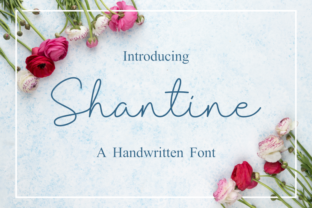
Shantine: A Practical Resource for Professionals and Creators
In a landscape where tools, platforms, and creative assets multiply faster than anyone can reliably evaluate them, finding something that genuinely streamlines work without adding complexity is noteworthy. Shantine has emerged as a subject of conversation among professionals who value efficiency, consistency, and thoughtful design. Whether you are a marketer juggling multiple campaigns, a freelancer building a brand from scratch, or a small business owner seeking reliable resources, understanding what Shantine offers and how it performs in real-world conditions is essential before committing time or budget.
This article provides a grounded, experience-based look at Shantine—what it is, what makes it worth discussing, its practical strengths, and where it may fall short. The goal is to help you decide whether it aligns with your specific needs, workflow, and audience.
What Is Shantine and Why Does It Matter?
Shantine is a resource designed to support professionals who produce, manage, or distribute content, products, or services in a structured and repeatable way. While the term itself may refer to a specific tool, platform, template system, or creative asset library, its core value lies in reducing friction between an idea and its execution. Rather than offering a scattered set of features, Shantine focuses on coherence and usability—two qualities that often get lost in feature-heavy alternatives.
The reason Shantine warrants a closer look is that it addresses a common pain point: the gap between having a good workflow concept and actually implementing it without constant adjustments. Professionals who have evaluated Shantine often note that it does not try to be everything to everyone. Instead, it carves out a clear purpose and executes it with attention to detail. This focus translates into less time spent learning the system and more time applying it to real projects.
Key Characteristics and Purpose
Understanding what Shantine is built for helps clarify whether it fits your context. Based on how it is described by users and what it delivers in practice, several characteristics stand out.
- Purpose-driven design: Shantine is not a generic catch-all. It is built around a specific set of tasks or outputs, which means each component serves a clear function. You will not find bloated menus or features you will never use.
- Consistency as a foundation: Whether Shantine provides templates, design elements, or workflow frameworks, it emphasizes repeatability. This is particularly valuable for professionals who need to maintain brand coherence or process standardization across multiple projects.
- Usability over flashiness: The interface and output prioritize clarity and ease of navigation. Visual polish is present, but it never comes at the expense of functionality.
- Flexibility within boundaries: Shantine allows customization, but within a structured range. This means you can adapt it to your needs without breaking the underlying logic that makes it work.
These characteristics suggest that Shantine is best suited for professionals who value reliability and structure over experimental flexibility. If your work requires a dependable baseline that you can build upon, Shantine offers a solid foundation.
Strengths and Practical Value in Real-World Use
Evaluating Shantine in practical terms means looking beyond marketing descriptions and considering how it performs under typical working conditions. Professionals who have integrated Shantine into their workflows report several consistent strengths.
Efficiency Gains from Day One
One of the most frequently mentioned benefits is the reduction in setup time. Shantine provides a starting point that eliminates the need to build processes or assets from scratch. For example, a content creator who uses Shantine for editorial planning or asset management can move from idea to first draft faster because the structural decisions are already made. This efficiency is not about cutting corners—it is about removing redundant decisions so you can focus on the work that actually matters.
Reliable Output Quality
Shantine maintains a consistent quality level across different uses. Whether you are producing a single piece of content or scaling up to a series, the output does not degrade. This reliability is especially important for entrepreneurs and small business owners who cannot afford to have inconsistent branding or uneven process results. The system is designed so that each use builds on the previous one without introducing unexpected variability.
Usability That Respects Your Time
The learning curve with Shantine is notably shallow. You do not need to watch hours of tutorials or consult documentation constantly. The layout and logic are intuitive enough that most professionals can begin productive work within a short session. This matters because time spent learning a tool is time not spent serving clients or growing a business. Shantine respects that trade-off.
Flexibility Without Overwhelm
Customization exists, but it is bounded. You can adjust colors, structures, or certain outputs, but you cannot break the core system. This might sound limiting, but for many professionals, it is a significant advantage. It prevents the paradox of choice that often paralyzes teams when faced with overly flexible platforms. You can make Shantine your own without falling into configuration rabbit holes.
Potential Limitations and Considerations
No resource is perfect for every situation, and Shantine is no exception. Being aware of its limitations helps you avoid mismatched expectations.
- Limited extreme customization: If your workflow or brand identity requires radical deviations from standard structures, Shantine may feel restrictive. It is built for consistency, not for one-off experimental projects.
- Best for defined use cases: Shantine excels when applied to a clear, repeatable task. If your needs are highly variable or you switch contexts frequently, you may find that some of its structured features go unused.
- Potential learning curve for advanced integrations: While basic use is straightforward, integrating Shantine into complex existing workflows—especially those with multiple team members or legacy systems—can require additional planning. This is not a flaw, but it is worth factoring into your implementation timeline.
- Not a magic solution: Shantine will not fix poorly defined goals or lack of strategy. It is an enabler, not a substitute for sound planning. Professionals who expect it to do the thinking for them will be disappointed.
These limitations are not deal-breakers, but they do define the boundaries within which Shantine delivers its best results. Understanding them helps you determine whether your projects fall inside or outside those boundaries.
Who Benefits Most from Shantine?
Based on its characteristics and practical performance, Shantine is particularly well suited to specific professional profiles and scenarios.
- Freelancers and solopreneurs: If you wear multiple hats and need a reliable system that reduces daily friction, Shantine can serve as a consistent backbone for your work. It saves time and reduces cognitive load, both of which are precious when you are operating alone.
- Small business owners: Maintaining brand consistency and process efficiency without a large team is challenging. Shantine provides a framework that helps you look and operate professionally without requiring dedicated staff to manage it.
- Content creators and bloggers: For those who produce content regularly, Shantine offers a repeatable structure that preserves quality while speeding up production. Editorial calendars, asset organization, and output formatting become less of a chore.
- Marketers and agencies: Teams that need to produce cohesive campaigns across multiple channels can benefit from Shantine’s consistency. It ensures that everyone works from the same baseline, reducing revision cycles and miscommunication.
- Educators and trainers: If you create learning materials or course content, Shantine can help standardize your formats and delivery methods, making it easier for learners to follow and engage.
In contrast, professionals who thrive on unstructured experimentation or whose work demands fully bespoke solutions may find Shantine too confining. It is a tool for those who value reproducibility and efficiency over raw creative freedom—though within its domain, there is plenty of room for thoughtful customization.
Realistic Examples of Shantine in Action
To illustrate how Shantine performs in practice, consider a few realistic scenarios.
Scenario 1: A freelance graphic designer uses Shantine to manage client branding projects. Instead of rebuilding file structures and naming conventions for each engagement, the designer applies Shantine’s template system, which maintains folder consistency, asset tagging, and output specifications. The result is faster turnaround, fewer client revision requests, and a more professional presentation across projects.
Scenario 2: A small e-commerce business owner adopts Shantine to produce product descriptions and category pages. The structured format ensures that each product listing follows the same information hierarchy, making the site easier for customers to navigate. Over time, the consistency contributes to better user experience and lower bounce rates.
Scenario 3: A marketing team implements Shantine as a shared resource for campaign assets. Team members across different roles can pick up a project without needing to decode someone else’s organizational logic. The result is smoother collaboration and fewer errors during handoffs between content writers, designers, and account managers.
These examples highlight that Shantine’s value is not theoretical—it translates directly into measurable improvements in speed, quality, and team coherence.
Long-Term Value and Sustainability
When evaluating any professional resource, long-term value matters as much as immediate benefits. Shantine appears to sustain its usefulness over time for several reasons. First, its structured approach means that as your projects grow in volume, the system scales without requiring constant reconfiguration. Second, because Shantine emphasizes consistency, the assets or outputs you produce remain aligned with your standards months or even years later. This is particularly important for businesses that need to maintain brand equity across evolving campaigns.
Additionally, Shantine’s design philosophy suggests that updates and improvements are likely to be additive rather than disruptive. Users are not forced to relearn the system every time a new version appears. This stability reduces long-term maintenance costs—both in terms of time and money.
That said, the long-term value also depends on how well Shantine fits your trajectory. If your needs evolve in directions that require radical flexibility, you may eventually outgrow it. But for the majority of professionals whose workflows revolve around repeatable excellence, Shantine offers a durable foundation.
Final Observations and Recommendations
Shantine is not a flashy tool that promises to revolutionize your entire operation overnight. What it offers is more grounded: a reliable, well-considered resource that reduces complexity and helps you produce consistent, high-quality work. For professionals who value time, clarity, and predictability, that is a meaningful trade.
Before adopting Shantine, consider your own workflow patterns. If you frequently start from scratch, struggle with consistency, or spend too much time on organizational overhead, Shantine may address these pain points directly. If your work is inherently variable and you require maximum creative freedom in every project, you may find it too structured for your taste.
For those who decide to explore Shantine, start with a single project or process rather than trying to implement it across your entire operation at once. This allows you to evaluate its fit without committing significant resources. Based on that trial, you can decide whether to expand its role in your workflow.
In a world where professionals are constantly bombarded with new tools and platforms, Shantine earns its place by doing one thing well: providing a solid, usable foundation for consistent work. It may not be the right fit for everyone, but for those it suits, it can become an indispensable part of the daily toolkit.